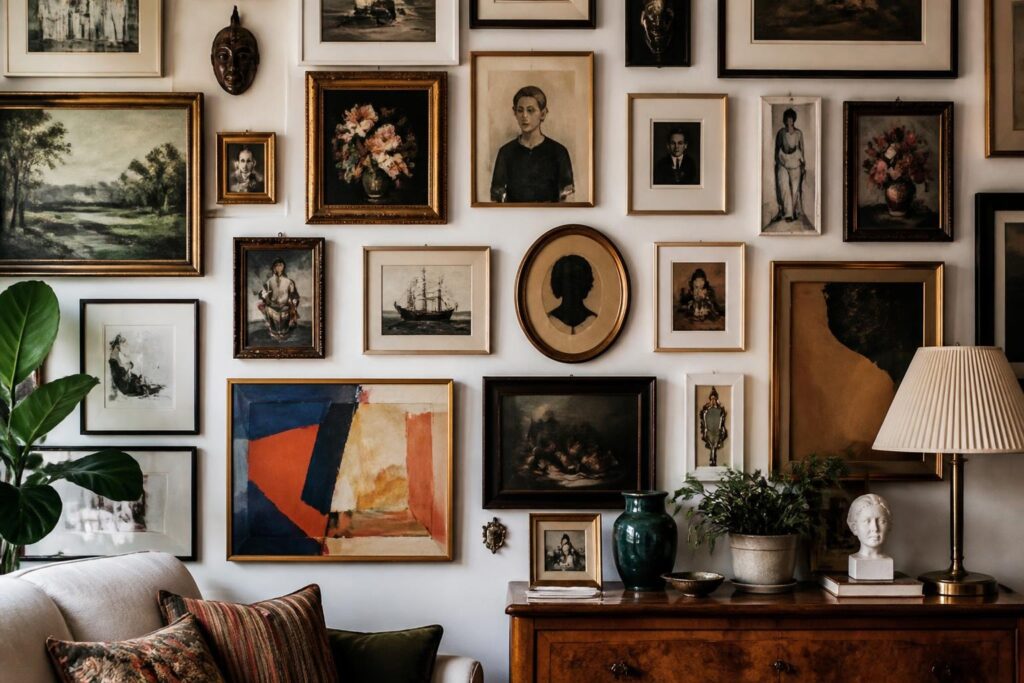
There's something deliciously rebellious about a maximalist gallery wall. While the design world keeps trying to convince us that blank walls and breathing room are the height of sophistication, we know the truth: a wall packed with art, memories, vintage finds, and personal treasures tells a far more interesting story. Creating a maximalist gallery wall isn't about throwing random frames on the wall and calling it done (though we've all been tempted). It's about building a curated collection that feels intentional, personal, and gloriously abundant. The best part? You can create this look without dropping thousands at high-end galleries or custom framers.
Why Maximalist Gallery Walls Work for Real Life
Maximalism gets a bad rap as expensive or chaotic, but honestly? It's one of the most budget-friendly design approaches out there. You're not hunting for that one perfect piece of statement art. You're building a collection over time with thrift store finds, family photos, vintage prints from estate sales, and yes, maybe a few splurges on pieces you truly love.
The beauty of a maximalist gallery wall is that it's never really finished. You can add, rearrange, and swap pieces as your taste evolves or as you stumble upon new treasures. That vintage gilt frame you scored for eight bucks at the Goodwill? It belongs here. The kids' artwork from 2019? Absolutely. The botanical print you downloaded and printed at home? Yes, that too.
Key benefits that make this approach perfect for our budget:
- No need to invest in expensive statement pieces
- Imperfections and mismatched elements add character
- You can DIY frames, mats, and even art
- Thrifted and vintage pieces cost a fraction of new
- The overall impact matters more than individual pieces
- Easy to refresh without starting over
Planning Your Maximalist Gallery Wall Layout
Here's where people get intimidated. They see curated maximalist gallery walls and assume it just happened naturally. Spoiler: it didn't. Even the most delightfully chaotic-looking walls started with some planning.
The Anchor System That Actually Works
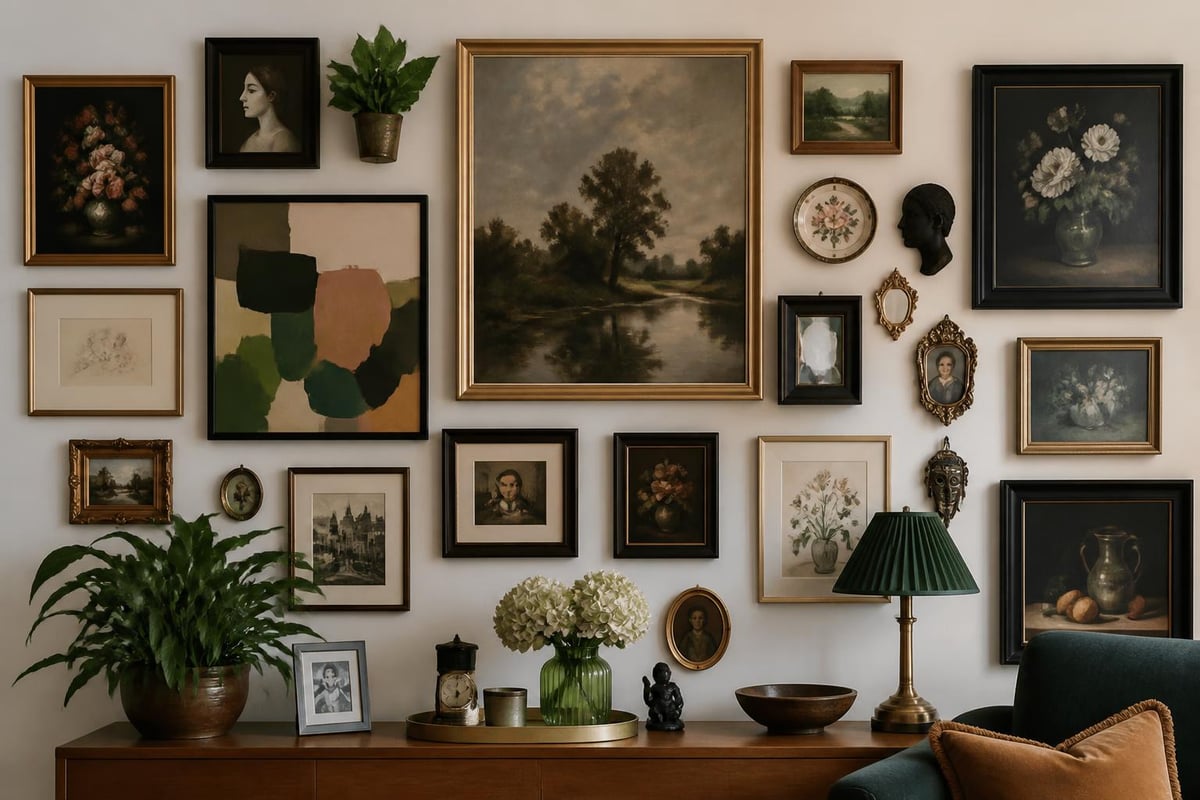
Think of your wall in three tiers: anchors, satellites, and fillers. This isn't some complicated design theory. It's just a way to make sure your eye has somewhere to land. Your gallery wall layout needs structure, even if the final look feels spontaneous.
Anchors are your largest pieces, typically 16×20 inches or bigger. These ground the composition and give the wall weight. You'll want two to four anchor pieces depending on your wall size.
Satellites orbit around your anchors. These are medium-sized frames (8×10 to 11×14), and they're your workhorses. They fill space and create visual connections between your anchors.
Fillers are your small pieces, 4×6 to 5×7. These are your secret weapons for filling awkward gaps and adding personality. Think vintage postcards, small prints, pressed flowers in tiny frames, or even decorative plates.
| Frame Type | Size Range | Quantity Guide | Best For |
|---|---|---|---|
| Anchors | 16×20" or larger | 2-4 pieces | Bold art, large photos, statement pieces |
| Satellites | 8×10" to 11×14" | 6-10 pieces | Family photos, medium prints, thrifted art |
| Fillers | 4×6" to 5×7" | 8-15 pieces | Postcards, small prints, pressed botanicals |
The Floor Layout Trick
Before you put a single nail in the wall, lay everything out on the floor. I know, I know. It sounds basic. But this step saves you from a wall full of holes and regrets.
Start with your anchors roughly where you want them. Then build out with satellites, rotating and adjusting until the spacing feels right. Add fillers last. Take a photo from above once you're happy with it. This becomes your installation guide.
Sourcing Art and Frames Without Breaking the Bank
Let's talk money because that's where maximalism really shines. A single custom-framed piece can easily run $300-500. A maximalist gallery wall with thirty pieces? You could do that for the same amount if you're strategic.
Best Places to Find Affordable Frames
Thrift stores and estate sales are goldmines. I'm talking ornate vintage frames for under $10, sometimes still with the original (terrible) art inside. You're buying the frame, not the art. Don't be precious about it.
Facebook Marketplace and estate sale listings often have people selling entire collections. I've scored boxes of frames for $20. Some needed cleaning. Some needed paint. All were worth it.
Dollar stores and discount retailers for basic frames you can customize. A $3 black frame becomes something special with gold spray paint or decorative corners you hot-glued on while watching reality TV.
The tidy maximalism approach means being selective even while embracing abundance. Not every frame makes the cut. Look for interesting shapes, quality construction, and variety in style.
Creating Art When You Can't Find It
You don't need to be an artist. You need a printer, some creativity, and zero shame about DIY.
- Download public domain artwork from museum collections
- Print family photos in black and white for a cohesive look
- Frame fabric samples, wallpaper scraps, or vintage book pages
- Use your own photography (that vacation sunset counts as art)
- Commission affordable pieces from local artists or Etsy shops
- Frame sentimental items like concert tickets or love letters
The goal isn't museum-quality everything. The goal is a collection that tells your story and feels authentically you.
Color Palettes and Cohesion Strategies
Here's the thing about a maximalist gallery wall: it can handle a lot of visual information, but it still needs some thread of cohesion. Otherwise, it's just… chaos. And not the good kind.
Choosing Your Color Story
You've got options here. Some people go monochromatic with all black frames. Some embrace gold everything. I personally love a mix, but with a consistent element that ties it together.
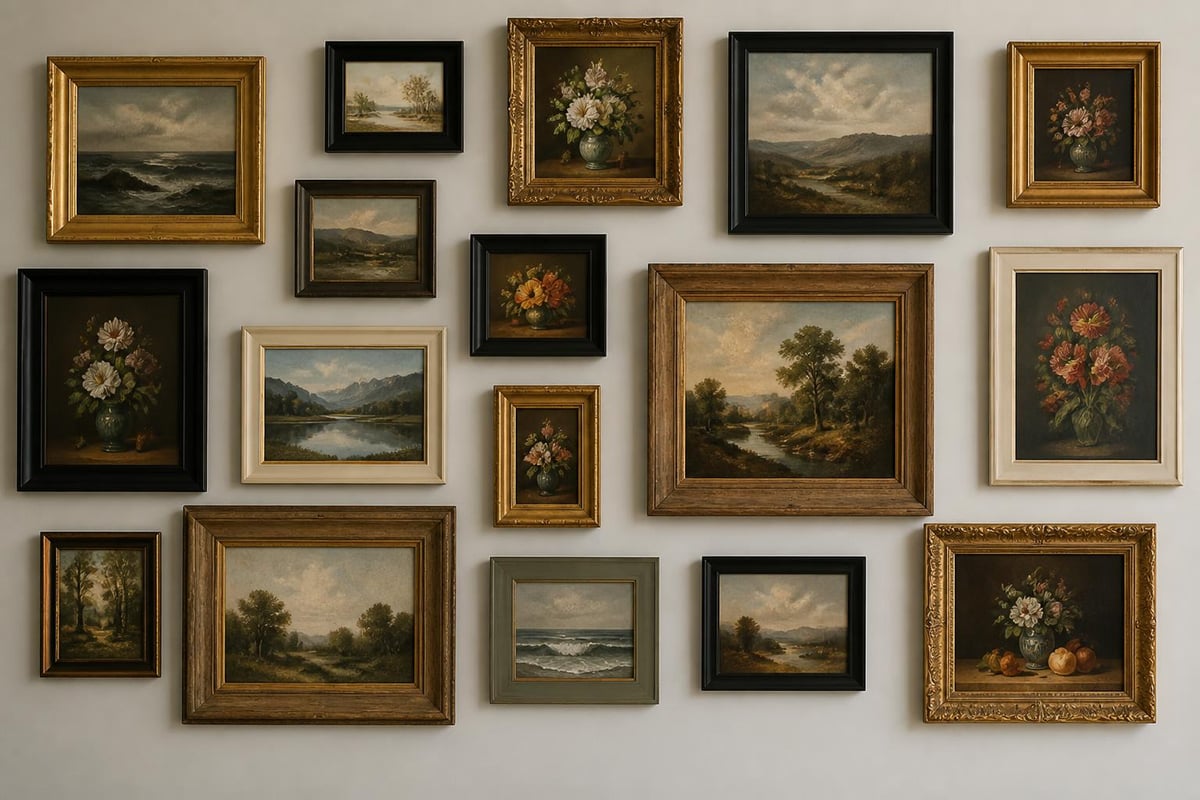
Option one: Consistent frame color, varied art. All black frames or all gold frames with wildly different art inside. This is the easiest path to cohesion.
Option two: Consistent art palette, varied frames. Maybe all your art has touches of blush pink and green, even if the frames are all different styles and finishes.
Option three: Strategic repetition. Repeat certain colors, shapes, or themes throughout. Three pieces with botanical elements. Four frames in gold. Five items with black and white photography.
The everyday exhibits trend happening in 2026 embraces this kind of personal curation. It's about making your wall feel like a collected-over-time installation rather than something you bought in one shopping trip.
Mixing Metals and Finishes
Don't stress about matching metals perfectly. A wall with all identical gold frames can actually feel less interesting than one with brushed gold, bright gold, rose gold, and even some brass mixed in. The variety adds depth.
Same goes for wood tones. Light oak next to dark walnut next to painted white? That's not a mistake. That's character. Just make sure you're distributing the variety evenly so you don't end up with all the dark frames clustered in one corner.
Installation Tips That Save Your Walls (and Sanity)
You've planned, you've sourced, you've laid everything out on the floor. Now comes the scary part: making holes in your wall. Deep breath. We've got this.
The Paper Template Method
Trace each frame onto kraft paper or newspaper. Cut out the templates. Tape them to the wall exactly where you want each frame based on your floor layout. Step back. Adjust. Mark where your nails go right through the paper. Remove paper. Install hooks or nails. Hang frames.
This method isn't glamorous, but it works. You can even leave the templates up for a few days and live with the layout before committing.
Smart Hanging Hardware
For lighter frames (under 5 pounds): Command strips work great and save your walls if you're renting.
For medium frames (5-10 pounds): Picture hanging hooks with angled nails. They hold more weight than you'd think.
For heavy frames or anything valuable: Wall anchors or screws into studs. Don't risk it falling.
For the whole maximalist gallery wall: Consider a picture rail system if you're committed long-term. You can adjust heights and swap pieces without new holes.
Spacing and Balance
Aim for 2-3 inches between frames. Sometimes you'll go tighter in some spots for that packed salon-style look, which is perfectly acceptable for maximalist walls. Just keep it consistent within each cluster.
Balance doesn't mean symmetrical. It means visual weight is distributed. A large dark frame on the left can be balanced by several smaller pieces on the right. Step back frequently during installation. Take photos from across the room. Your phone camera sees things your eyes miss when you're close.
Adding Dimension Beyond Flat Frames
A truly stunning maximalist gallery wall isn't just flat art in frames. It's got layers, texture, and objects that create depth. This is where the magic happens.
Three-Dimensional Elements to Consider
Mirrors are brilliant for breaking up the flatness. A vintage hand mirror, a decorative wall mirror, or even a mirror in an ornate frame adds reflection and light.
Plates and ceramics bring curves and texture. Vintage decorative plates, small ceramic pieces on plate hangers, or even a collection of antique spoons can work.
Sculptural objects like wooden letters, metal wall art, or shadow boxes add literal depth. They cast shadows and catch light differently throughout the day.
Textiles and tapestries soften the wall. A small macramé piece, an embroidered hoop, or a vintage handkerchief in a frame adds tactile interest.
Natural elements like pressed flowers, dried botanicals, or even a mounted antler (if that's your vibe) bring organic shapes into the composition.
The key is distribution. Don't cluster all your dimensional pieces together. Scatter them throughout so the eye travels across the entire wall discovering new textures and depths.
Making It Personal and Meaningful
Anyone can buy a pre-designed gallery wall set from a big-box store. That's not what we're doing here. Your maximalist gallery wall should tell your story in a way that makes guests ask questions and makes you smile every time you walk by.
What to Include Beyond Pretty Pictures
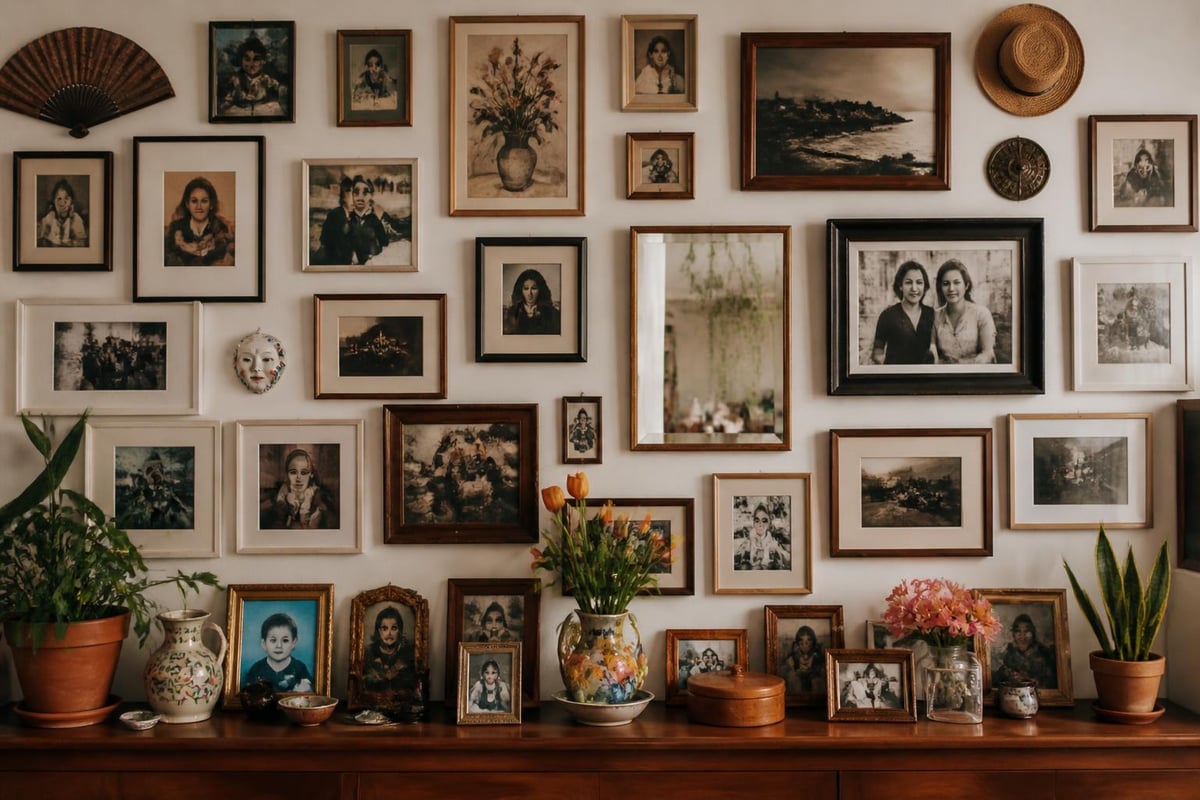
Think about what makes your life beautiful and interesting. Meaningful experiences deserve space on your walls. That menu from the cooking class in Florence? Frame it. The map from your road trip? Perfect filler piece. The ticket stub from a concert that changed your life? Absolutely.
Family connections matter here. Not just the perfect professional photos, but the candid moments. The ridiculous selfie with your best friend. The photo of your grandmother that's slightly out of focus but captures her laugh. The drawing your kid made that's mostly scribbles but means everything.
Collections tell stories too. If you collect vintage postcards, display them. If you have a thing for antique keys, shadow box them. If you've saved every ticket stub from movies with your partner, create a frame collage. Your quirks and interests make the wall uniquely yours.
Consider creating small themed clusters within the larger wall. A section dedicated to family. A corner for travel memories. A cluster of botanical prints that reflects your seasonal living mindset.
Maintaining and Evolving Your Gallery Wall
The beauty of maximalist design is its flexibility. This isn't a set-it-and-forget-it situation. Your wall should grow and change with you.
Seasonal Swaps and Updates
Keep a few frames with easy-open backs so you can swap art seasonally. Botanical prints in spring, beach photos in summer, moody landscapes in fall, cozy cabin vibes in winter. You don't need to change the entire wall, just a few strategic pieces that shift the overall mood.
This approach aligns perfectly with living seasonally and intentionally without constantly buying new décor. You're working with what you have, just refreshing the arrangement.
When to Add vs. When to Edit
Just because you can add more doesn't mean you should. If you find an incredible piece, something else might need to come down. Think of your wall as a living collection that breathes and evolves.
Add when:
- You find something that genuinely excites you
- There's a natural gap or awkward spacing
- You want to commemorate a meaningful moment
- The wall feels too sparse or unfinished
Edit when:
- The wall feels cluttered rather than curated
- Pieces no longer resonate with you
- The color balance feels off
- Something isn't working visually
Store removed pieces in a dedicated bin. You might rotate them back in later, or they might find new homes in different rooms.
Cleaning and Care
Dust happens. Every few months, give your wall a gentle dusting with a microfiber cloth or duster. For glass, use a barely damp cloth and dry immediately. For valuable pieces, consider UV-protective glass to prevent fading.
Check hanging hardware annually. Frames get bumped, walls settle, and hardware loosens over time. A quick check prevents disasters.
Budget Breakdown for Different Wall Sizes
Let's get practical about costs because budgeting matters when you're building a beautiful life without overspending. Similar to paying off loans strategically, you can build your gallery wall in phases.
Small Wall (4-6 feet wide)
Estimated piece count: 12-18 frames
| Item | Budget Option | Cost |
|---|---|---|
| Frames | Mostly thrifted, few new | $50-80 |
| Art/prints | DIY prints, downloads, some originals | $30-50 |
| Hanging supplies | Hooks, nails, level | $15-25 |
| Total | $95-155 |
Medium Wall (6-10 feet wide)
Estimated piece count: 20-30 frames
| Item | Budget Option | Cost |
|---|---|---|
| Frames | Mix of thrifted and sale items | $100-150 |
| Art/prints | Combination of DIY and purchased | $60-90 |
| Hanging supplies | Including picture rail option | $25-40 |
| Total | $185-280 |
Large Wall (10+ feet wide)
Estimated piece count: 35-50 frames
| Item | Budget Option | Cost |
|---|---|---|
| Frames | Thrifted majority, strategic new buys | $150-250 |
| Art/prints | Mixed sources, some commissioned | $100-150 |
| Hanging supplies | Professional-grade hardware | $40-60 |
| Total | $290-460 |
Remember, you don't need to buy everything at once. Building your maximalist gallery wall over six months or a year means spreading the cost and finding better deals. It also means you're more likely to truly love each piece rather than settling because you're trying to finish quickly.
Common Mistakes and How to Avoid Them
Even with planning, gallery walls can go sideways. Here's what trips people up and how to sidestep the issues.
Hanging Everything Too High
The center of your gallery wall should be at eye level, roughly 57-60 inches from the floor. This is a standard gallery height for good reason. Too high and the wall feels disconnected from the room. Too low and it visually shortens your ceiling height.
Forgetting About Furniture
Your wall shouldn't float in space. It should relate to the furniture below it. If you have a sofa, the bottom edge of your gallery should be 6-8 inches above the back of the sofa. For a console table, leave 4-6 inches. This grounds the wall and makes the room feel cohesive.
Playing It Too Safe with Spacing
Tight spacing (1-2 inches) creates drama and that authentic salon-style arrangement that defines maximalist walls. Don't space everything out like you're afraid the frames will catch fire if they get too close.
Ignoring Scale Variety
All same-sized frames read as boring, not maximalist. You need size variety to create visual interest. Mix those big anchors with medium satellites and small fillers. The contrast is what makes it work.
Not Living With It First
The paper template phase isn't optional. Living with the layout for even 24 hours before making holes helps you spot issues. That frame that seemed perfect might look off-balance. That color cluster might feel too heavy on one side. Take your time.
Inspiration from Real Maximalist Gallery Walls
Sometimes you need to see it to believe it. Looking at how others have created maximalist gallery walls can spark ideas for your own space.
The resurgence of gallery walls in 2026 brings fresh energy to this classic approach. Celebrity examples like Josh Brolin’s Malibu home show how personal narrative drives the best gallery walls. His wall tells a story through carefully chosen pieces that reflect his life and interests, not just what looks pretty.
Even looking back to Kirk Douglas’s 1980s home office offers lessons in combining vertical storage with art display. Maximalism isn't new; we're just bringing it back with more intentionality and personal meaning.
Study walls you love and ask yourself what makes them work. Is it the color palette? The mix of frame styles? The balance of art types? The inclusion of objects beyond frames? Take notes and adapt what resonates with your space and style.
Working With What You've Got
Maybe you're renting and can't make a million holes. Maybe your walls are textured plaster that makes hanging tricky. Maybe you have chair rail or wainscoting that complicates placement. Real homes have real constraints, and your maximalist gallery wall can work anyway.
For renters: Picture rail systems, Command strips rated for appropriate weight, or leaning larger frames on shelves with smaller pieces hung above create the look without permanent damage.
For textured walls: Use anchors appropriate for your wall type. Toggle bolts for hollow walls. Masonry anchors for brick or concrete. The right hardware makes all the difference.
For walls with obstacles: Work around them. A thermostat becomes part of the composition. Chair rail defines a natural top or bottom edge. Window frames create boundaries that can actually help with planning.
For odd-shaped walls: Embrace it. A sloped ceiling, angled wall, or narrow hallway just needs adjusted planning. Use your floor layout to work out the shape, then transfer it to the wall.
Your constraints might actually make your wall more interesting. Perfect rectangular walls are easy. Working with challenges forces creativity that often leads to more distinctive results.
Creating a maximalist gallery wall is less about following rules and more about building a collection that reflects who you are and what you love. It's permission to display the beautiful, the meaningful, and the slightly imperfect all together in glorious abundance. Whether you're working with thrifted frames, family photos, or that piece of art you splurged on because it spoke to you, your wall tells your story in a way no catalog-perfect solution ever could. At Seasonably Fare, we believe building a beautiful life is about making intentional choices that honor both your aesthetic dreams and your budget realities. Your walls deserve to be as interesting as you are.