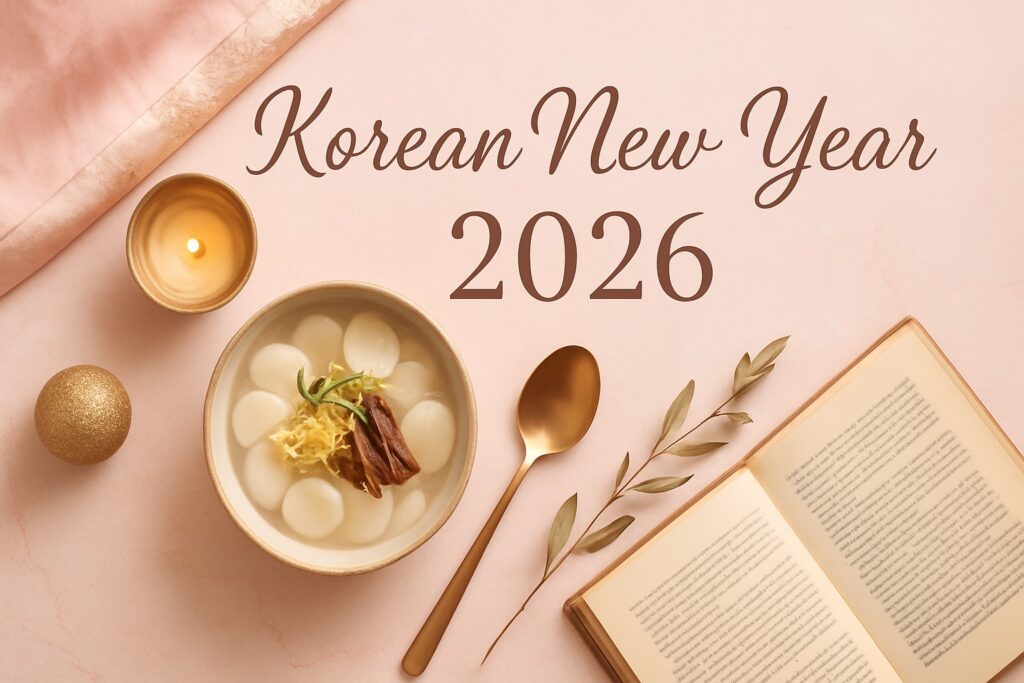
Imagine the shimmer of silk hanbok, the aroma of simmering tteokguk, and laughter echoing through cozy, candlelit rooms. Welcome to the heart of korean new year 2026, where tradition meets modern celebration in a swirl of blush pink, gold, and vintage charm. This guide will lead you through the enchanting world of Seollal, unveiling its history, cherished customs, festive foods, and family rituals. Whether you’re planning to join festivities in Korea or create your own celebration at home, you’ll find sparkling ideas and heartfelt insights to truly embrace the spirit of renewal and abundance.
The Origins and Significance of Korean New Year
Step into the soft glow of candlelight and imagine the gentle rustle of silk hanbok as families gather for a tradition steeped in beauty. Before you slip on those blush-pink slippers and join the celebration, let’s explore the heart and soul of korean new year, from its ancient roots to its sparkling modern-day meaning.
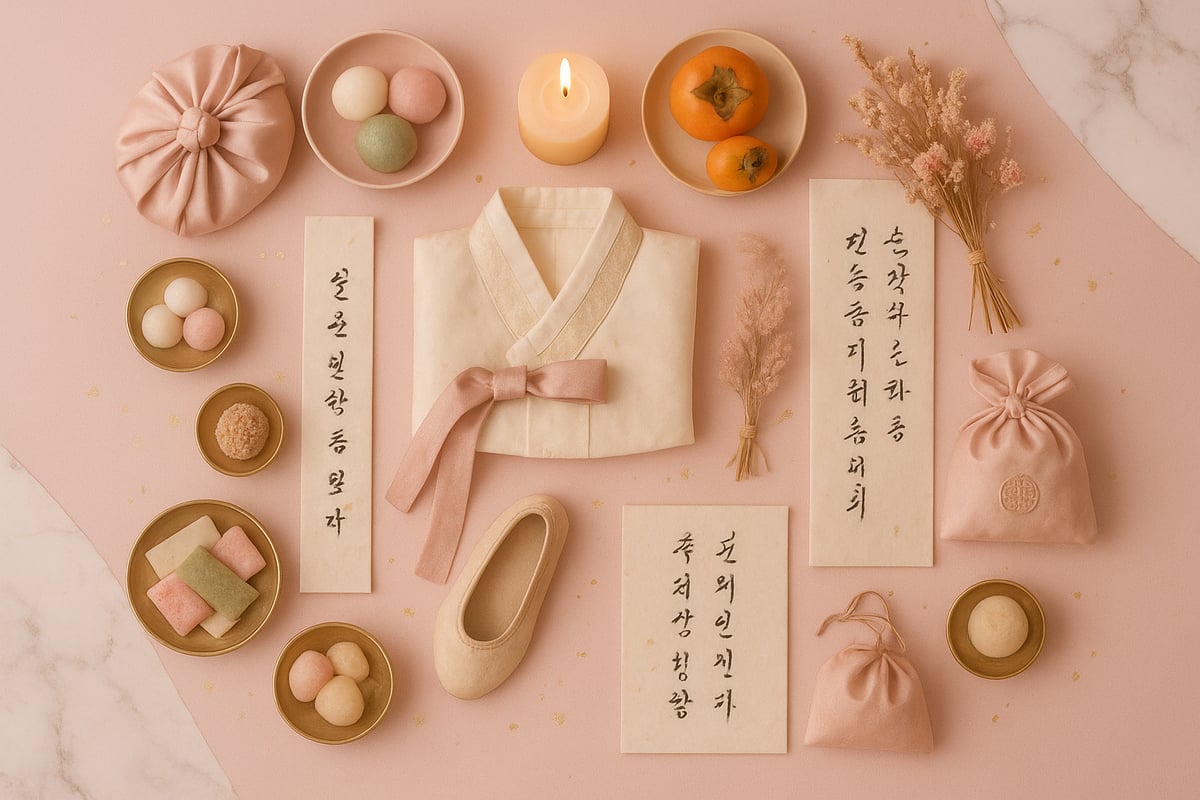
The Lunar Calendar and Date for 2026
Korean new year, known as Seollal, falls on February 17, 2026, guided by the lunar calendar’s mysterious rhythm. Unlike the solar calendar most of us follow, the lunar calendar traces the moon’s cycles, which means Seollal’s date shimmers and shifts each year.
While Seollal often aligns with other Asian lunar new years, it dances to its own tune, blending uniquely Korean rituals and moods with a calendar shared across the region. The result? A celebration that feels both timeless and distinctly Korean.
Historical Roots and Cultural Meaning
The story of korean new year begins in fields of golden rice and ancient villages where families honored their ancestors, hoping for a bountiful harvest and a year filled with blessings. Over centuries, Chinese calendar traditions wove their way into Korean life, but Seollal blossomed into something beautifully its own.
Ancient texts like the Records of the Three Kingdoms whisper tales of early Seollal observances, where rituals and folk beliefs intertwined. Charye tables, layered with symbolic foods, became a way for families to connect with their roots and seek guidance from those who came before.
Today, Seollal is much more than a date—it’s a time for renewal, a velvet ribbon tying together unity, gratitude, and gentle reflection on the year that’s passed. If you’re curious to dive deeper, the Korean New Year Traditions and Customs page offers a gorgeous tapestry of history and meaning.
Symbolism and Modern Relevance
The word “Seollal” (설날) sparkles with symbolism. It marks not just a new year, but a new age for everyone—on Seollal, Koreans officially become a year older. This tradition is cherished in both South and North Korea, and radiates out to the global Korean diaspora, connecting families across continents.
Once rooted in the rhythms of farming life, korean new year now shimmers in chic city apartments and cozy homes alike, evolving into a family-centered holiday that blends nostalgia with contemporary flair.
Comparison with Other Lunar New Year Celebrations
Korean new year shares its lunar glow with Chinese, Vietnamese, and Mongolian celebrations, but each culture adds its own golden thread. Here’s a quick look in table form:
| Celebration | Signature Foods | Unique Rituals |
|---|---|---|
| Korean New Year | Tteokguk, jeon | Charye, sebae, hanbok |
| Chinese New Year | Dumplings, fish | Red envelopes, dragon dance |
| Vietnamese Tet | Banh chung, pickles | Ancestral altars, lucky money |
| Mongolian Tsagaan Sar | Dairy dishes | Visiting elders, blue scarf gifts |
From the specific order of Seollal’s ancestral rites to the playful games and bows, korean new year glows with its own personality and vintage charm.
Why Seollal Matters in Today’s Korea
In a world spinning faster with each year, korean new year anchors families in tradition, respect, and shared joy. It’s a time for heartfelt blessings, laughter echoing across generations, and a celebration of identity that feels both grounding and glamorous.
Seollal strengthens intergenerational bonds, nurturing a sense of belonging and pride that glows long after the candles burn down. In every bow, every shared meal, and every whispered wish, korean new year reminds us that true abundance is found in connection and tradition.
Essential Traditions and Family Rituals
Step into a world where blush silk, candlelight, and laughter swirl together—this is the heart of korean new year. Seollal is a layered celebration, a vintage jewelry box filled with cherished family rituals, radiant traditions, and a sprinkle of modern sparkle. Let’s open each velvet-lined compartment and discover how families across Korea (and the world) mark this magical season.
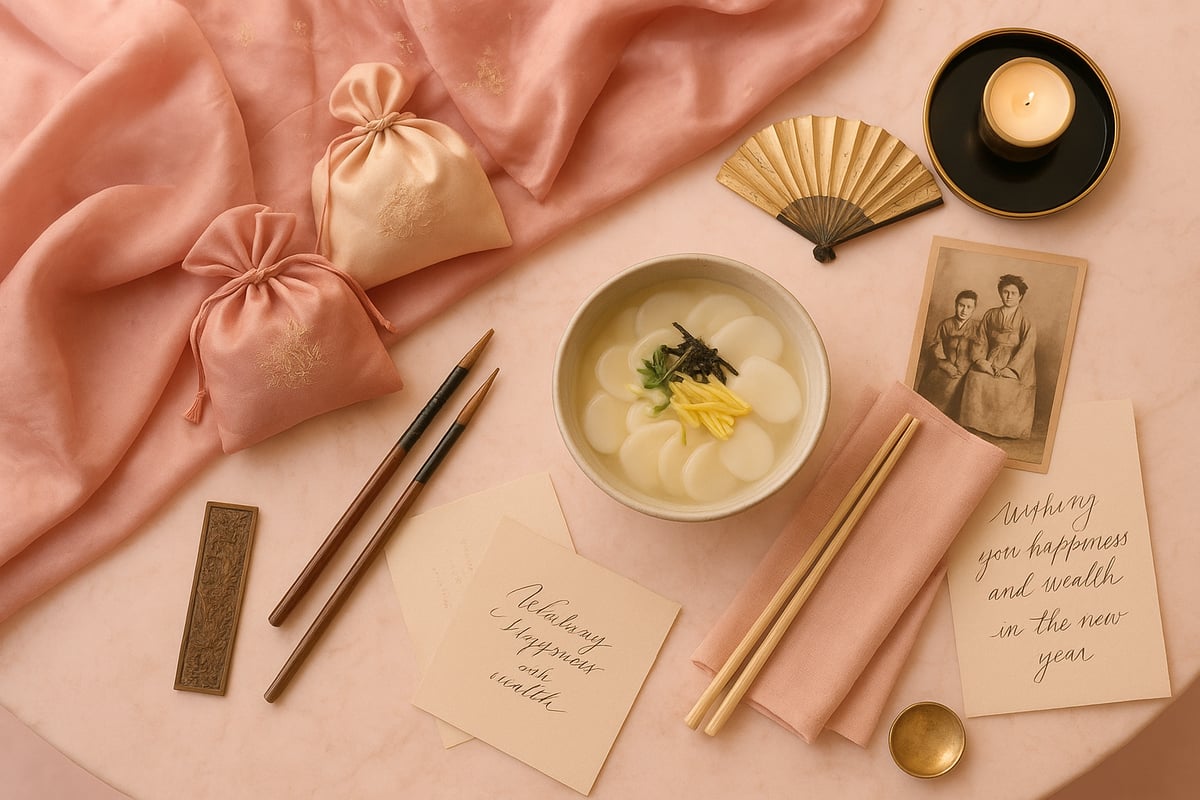
The Chronology of Seollal: Step-by-Step Traditions
The days leading up to korean new year are a flurry of preparation. Kitchens fill with the aroma of simmering broths, and homes get a thorough, sparkling clean. Families travel—sometimes across the country—to reunite under one roof.
On the main day, dawn brings everyone together for ancestral rites. Afterward, the home comes alive with laughter, games, and the sharing of blessings. The final hours are spent in cozy circles, feasting and reflecting on hopes for the year ahead.
Charye (차례): Honoring Ancestors
Charye is the soul of korean new year. Families lay out a ceremonial table, each dish meticulously arranged—golden jeon, glossy fruits, and snowy tteokguk, each in its special place. The table looks almost too beautiful to eat, with textures and colors reminiscent of a marble-topped vintage buffet.
Everyone gathers in hushed reverence to bow and offer prayers. The ritual is more than tradition; it’s a tangible connection to generations past, infusing the home with gratitude and a sense of renewal.
Sebae (세배): Respectful New Year’s Bows
Sebae is where warmth and elegance meet. Children and younger relatives slip into vibrant hanbok, then bow deeply to elders, their movements graceful as silk ribbons. In return, elders offer heartfelt wishes and sebaetdon—shimmering envelopes of good fortune.
Want to craft your own meaningful greeting? Explore thoughtful inspiration at Happy New Year wishes for family. This tradition isn’t just about bows or money; it’s about weaving bonds of respect and gratitude, one blessing at a time.
Hanbok and Festive Attire
No korean new year is complete without the tactile beauty of hanbok. Imagine layers of blush, black, and gold silk, each representing joy, luck, and heritage. Slipping into hanbok feels like wrapping yourself in family history—a ritual that turns every living room into a vintage runway.
Wearing these vibrant garments is more than tradition. It’s an act of celebration, connecting families to their roots and adding a layer of cozy luxury to the festivities.
Gift-Giving and Good Fortune Rituals
Gift-giving is a cherished part of korean new year, blending thoughtful gesture with a hint of glam. Popular presents include silk pouches, luscious fruit baskets, and healthful teas. Many families also exchange mandu or specialty foods, wishing each other abundance and well-being.
Fortune-telling (saju) and watching the first sunrise together are beloved rituals. These moments, filled with anticipation and hope, bring a sense of magic and unity to every home.
Modern Adaptations and Family Variations
Modern life has given korean new year a fresh twist. In cities, some families gather virtually, while others create new rituals in cozy apartments. Single-person households celebrate with friends or neighbors, mixing tradition with contemporary flair.
No matter how it’s observed, the spirit of Seollal remains: honoring the past, embracing abundance, and celebrating the beauty of togetherness.
Festive Foods: Culinary Delights of Seollal
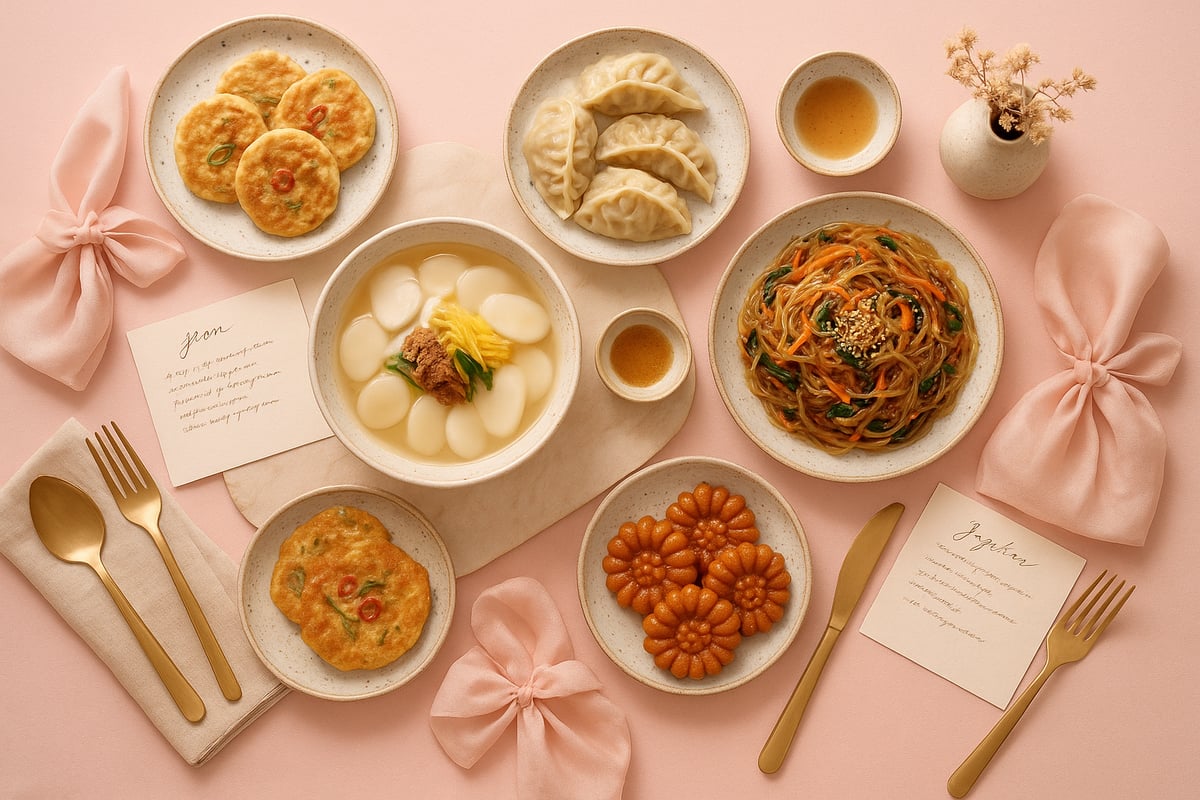
Gather around the table and imagine a blush pink silk runner, gold-rimmed bowls, and the cozy aroma of simmering broth. The culinary heart of Korean New Year is a feast for the senses, where every dish tells a story of tradition, abundance, and love. Let’s savor the edible jewels of Seollal together.
Tteokguk (떡국): The New Year’s Rice Cake Soup
Tteokguk is the shimmering centerpiece of every korean new year table. Picture a porcelain bowl filled with snowy white rice cakes floating in clear, savory broth, topped with ribbons of egg, nori, and thinly sliced beef.
Eating tteokguk isn’t just delicious—it’s a ritual. Each spoonful is believed to bring purity, fresh beginnings, and, most charmingly, a whole year added to your age. No one is officially a year older until they’ve finished their soup. The smooth, chewy texture of the rice cakes is pure comfort, and the golden broth glows like winter sunlight on marble.
Jeon (전) and Buchimgae: Savory Pancakes
No korean new year celebration is complete without a platter of jeon and buchimgae. These golden, crisp pancakes come in a rainbow of flavors: spicy kimchi jeon, briny seafood jeon, and earthy vegetable pancakes, each layered with color and texture.
Making jeon is a family affair, with laughter and flour dust swirling through the kitchen. You might even find yourself swooning over a grandmother’s secret kimchi jeon recipe, passed down like a vintage brooch.
- Kimchi jeon: spicy, tangy, and iconic
- Seafood jeon: delicate with shrimp and scallion
- Vegetable jeon: crispy, savory, and endlessly customizable
Mandu (만두): Korean Dumplings
Mandu are the little treasures of the korean new year feast. Families gather, hands dusted with flour, to lovingly fold dumplings filled with pork, beef, kimchi, and fresh vegetables. The process is as precious as the result, with stories and jokes tucked into each pleat.
Mandu can be enjoyed in a fragrant soup (tteok-mandu-guk) or pan-fried to a golden crisp. However you serve them, they symbolize unity, prosperity, and the beauty of making something delicious together.
Japchae (잡채) and Banchan: Side Dishes
Japchae is the jewel-toned star of the side dish lineup, with glossy glass noodles, rainbow vegetables, and tender beef tossed in a savory-sweet sauce. The flavors are as layered as a vintage jewelry box.
The table sparkles with banchan, an array of pickled, stir-fried, and steamed sides. Each bite brings a new texture and taste, reminding everyone that korean new year is about variety, generosity, and sharing.
- Japchae: sweet potato noodles, sautéed veggies, sesame oil
- Banchan: kimchi, spinach namul, braised lotus root, and more
Sweet Treats and Seasonal Fruits
No korean new year table is complete without a touch of sweetness. Traditional sweets like yakgwa (honey cookies) and hangwa shimmer on porcelain plates beside elegant platters of fresh, round fruits—apples, pears, and tangerines, all symbols of luck and abundance.
These treats are as delightful to look at as they are to taste, with blush pinks and golds echoing the joy of the season. Sharing sweets is a gentle wish for a year filled with beauty and prosperity.
The Social Ritual of Cooking and Sharing
The true magic of korean new year food is found in the act of gathering, cooking, and feasting together. Multi-generational hands chop, stir, and season, filling the kitchen with the sizzle of jeon, the earthy aroma of simmering broth, and the warmth of laughter echoing off marble countertops.
Setting the table becomes a ritual of gratitude and abundance, each dish arranged with intention and love. If you’re inspired to create your own feast, explore Traditional Korean New Year Dishes for authentic recipes that bring the spirit of Seollal to life in your home.
A beautiful korean new year table is more than food—it’s a celebration of heritage, dreams, and the cozy luxury of togetherness.
Games, Entertainment, and Festive Activities
Step into the heart of korean new year festivities, where laughter sparkles like gold confetti and every room is alive with playful tradition. Imagine vintage hanbok sleeves fluttering as families gather around low marble tables, the air scented with sweet rice and possibility. Let’s explore the games and entertainment that make Seollal shimmer with connection and joy.
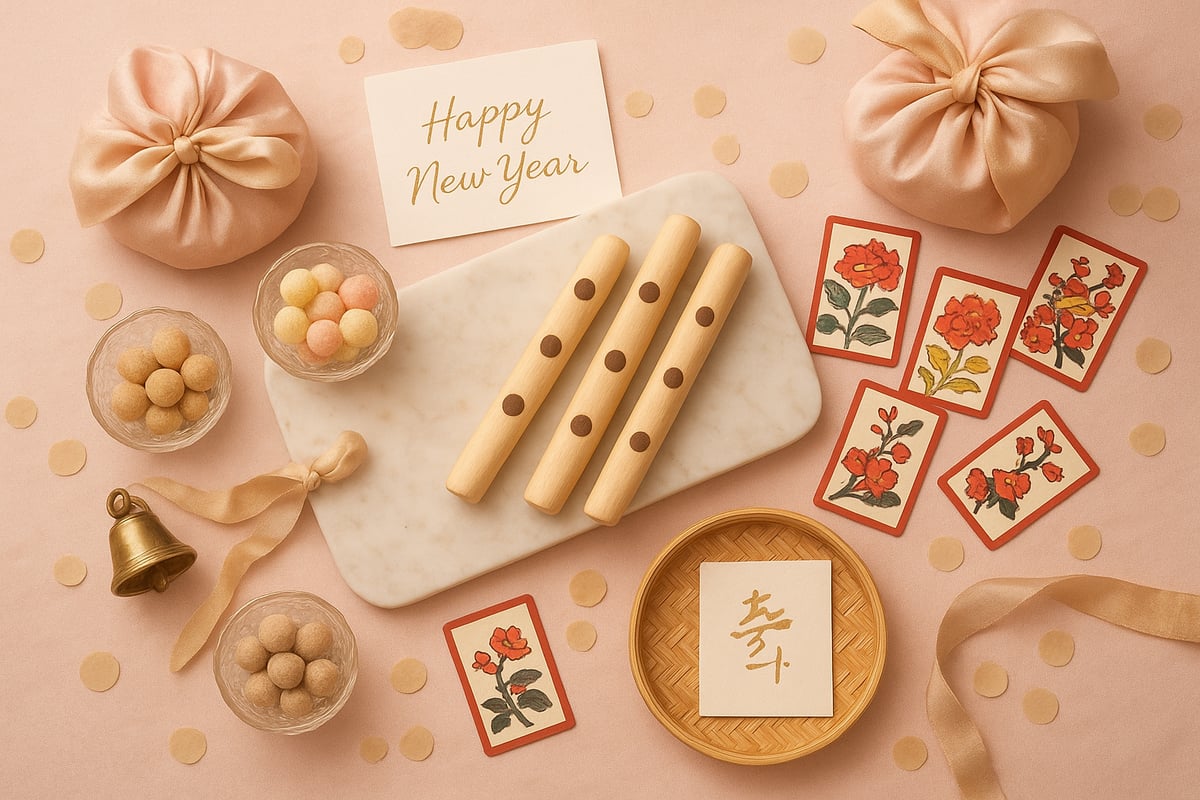
Yutnori (윷놀이): The Quintessential Board Game
Yutnori is the crown jewel of korean new year game tables. Picture four polished wooden sticks tossed across a glossy board, their clatter echoing like vintage bangles. Family members, young and old, huddle close, strategizing each move and cheering as tokens race around the board.
The rules are simple but the excitement is pure luxury: teams work together, luck and skill dancing hand-in-hand. Rivalries bubble up, laughter spills over, and even the shyest cousin gets swept up in the sparkle of competition.
- Toss four sticks, count the up-facing sides to move your markers.
- Teamwork is essential, making every win a group celebration.
- The winner’s prize? Bragging rights and sometimes a sweet treat.
Yutnori captures the spirit of korean new year perfectly, blending tradition, teamwork, and a hint of friendly mischief.
Neolttwigi and Tuho: Outdoor Fun
Step outside and you’ll find Seollal alive with the swish of silk hanbok and the joyful rhythm of neolttwigi, a seesaw game traditionally played by women and girls. Participants leap gracefully, skirts fluttering like petals, aiming to soar higher with each bounce.
Nearby, tuho invites all ages to test their skill by tossing slender arrows into narrow-necked jars. It’s harder than it looks, but the giggles and applause make every near-miss feel golden.
- Neolttwigi: See who can jump the highest, often in pairs.
- Tuho: Focus, aim, and toss for points and pride.
- Many parks and cultural centers host these games during korean new year.
These outdoor games connect generations and add a touch of athletic glam to the festivities.
Kite Flying (Yeonnalligi) and Other Customs
On breezy Seollal afternoons, families head outdoors to fly kites painted in blush, black, and gold—each design a wish for the year ahead. Tails flutter with handwritten hopes, vintage-inspired and full of promise.
Letting go of the string symbolizes releasing worries and welcoming fresh starts. The sky fills with color, and the sense of renewal is as light as silk.
Kite flying, along with small rituals, brings everyone together in the open air, infusing korean new year with vintage charm and childlike wonder.
Card Games and Modern Pastimes
As the sun sets, families cozy up indoors for Hwatu, the beloved flower card game. The cards, adorned with bold patterns and gold accents, glide across marble tabletops as laughter and playful banter fill the room.
Children dive into board games, while others gather around the TV for Seollal music shows and variety specials. The mix of old and new keeps the atmosphere vibrant and inclusive, blending nostalgia with modern comfort.
A table comparing Seollal favorites:
| Classic | Modern |
|---|---|
| Hwatu | TV Specials |
| Yutnori | Board Games |
Family Bonding and Passing Down Traditions
Korean new year is a living storybook, with grandparents sharing tales of past celebrations, explaining the meaning behind each game and gesture. Children listen wide-eyed, learning not just rules but the heart and soul of Seollal.
- Storytelling by candlelight, with blush pink throws and vintage photo albums.
- Teaching little ones how to bow or toss Yutnori sticks.
- Passing down secret family recipes and lucky charms.
These moments weave together legacy, gratitude, and the sparkle of togetherness.
Public Festivities and Community Events
If you crave more than home celebrations, korean new year in Korea dazzles with public festivities. Palaces and folk villages transform into scenes from a vintage dream—musicians in gold-trimmed hanbok, dancers swirling under lanterns, and hands-on workshops for visitors.
Expect traditional performances, craft booths, and the chance to try on hanbok or master Yutnori yourself. For a glam, immersive experience, check out Seollal Festivities for Visitors for tips on where to join the celebrations and soak up the abundance of korean new year.
Planning Your Korean New Year Experience
Pink silk suitcases, golden train tickets, and the scent of sweet rice cakes—let's get ready to celebrate korean new year in style. Whether you're jetting to Seoul or cozying up at home, a little planning will ensure your 2026 Seollal sparkles with meaning and joy.
Travel Tips for Seollal 2026
A little strategy goes a long way for korean new year travel. Expect train stations and airports to be abuzz with families heading home. Book your tickets early—think months in advance for the best seats.
Many shops and restaurants close during Seollal, so double-check hours for your must-see spots. Top celebration destinations include Gyeongbokgung Palace’s lantern-lit courtyards and the vintage charm of Namsangol Hanok Village. Pack something cozy and chic for brisk February evenings, and don’t forget a silk scarf or two for that perfect arrival photo.
How Non-Koreans and Travelers Can Join In
You don’t need a Korean passport to feel the magic of korean new year. Dive into public events, workshops, and festive markets. Hanbok rentals let you slip into tradition—imagine yourself in blush and gold silk, wandering palace halls.
Cooking classes are a delicious way to connect, and guided tours often include hands-on crafts or games. Smile, greet locals, and let yourself be swept up in laughter and lantern light. The best memories come from saying yes to the unexpected.
Creating a Seollal-Inspired Celebration at Home
Bring the glamour of korean new year into your own space. Whip up tteokguk or crisp jeon pancakes with friends—think vintage platters, marble coasters, and candlelight for a luxe table. Arrange fresh blooms in gold-trimmed vases for a pop of color.
Set the mood with cozy textures and handwritten blessing cards. Gather loved ones for games like yutnori or hwatu, and share wishes for the year ahead. Little rituals—chic décor, a toast with sweet tea, a gratitude list—make home celebrations truly shine.
Etiquette and Cultural Sensitivity
Korean new year is all about respect, beauty, and heartfelt connection. Greet with a warm “Saehae bok mani badeuseyo,” and if you’re joining a family ritual, bow or observe quietly.
Dress up a little, even at home—hanbok is lovely, but a vintage-inspired outfit works too. When gifting, choose items with meaning, like specialty teas or silk pouches. For formal greetings, get inspired by these Professional New Year wishes to express sincere blessings with grace and style.
Embracing the Spirit of Renewal and Abundance
Let korean new year inspire you to set intentions and celebrate what you’ve accomplished. Savor a moment of self-care: a luxurious bath, a journal session, or simply lighting a candle for gratitude.
This is your time for new beginnings. Whether you’re surrounded by family or flying solo, honor your growth, dream big, and let abundance flow in.
Resources for Further Exploration
Hungry for more korean new year magic? Explore books and documentaries on Seollal traditions, or seek out virtual events hosted by local Korean cultural centers. Embassies often offer workshops—perfect for adding new rituals to your vintage-chic repertoire.