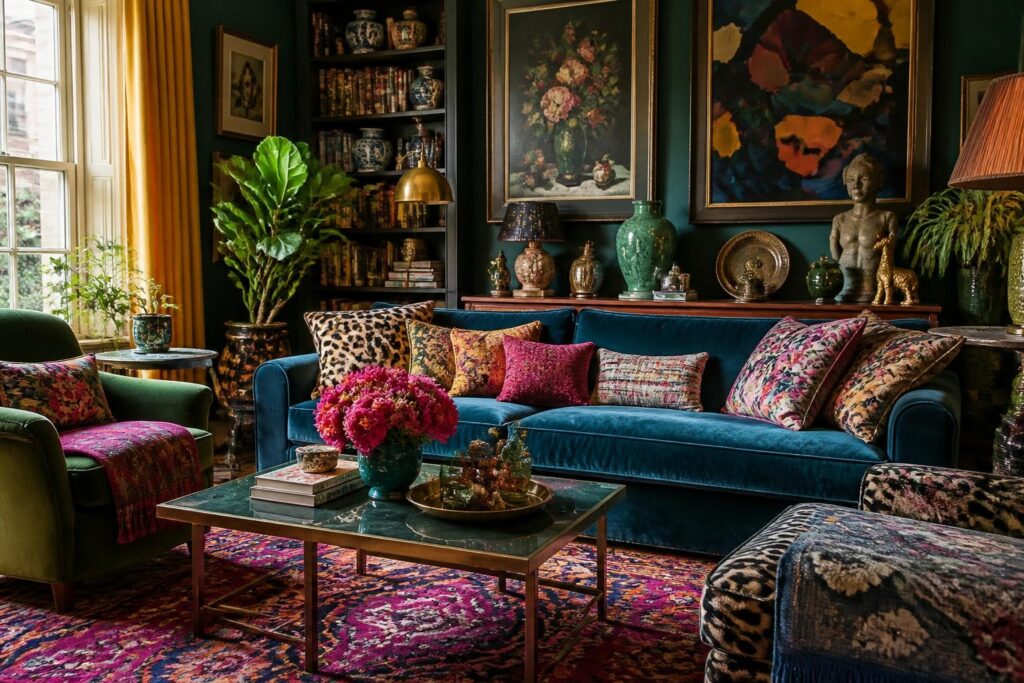
If you've ever walked into someone's perfectly sparse living room and thought "but where's all the stuff?" then congratulations, you might be a maximalist at heart. While the design world spent the last decade worshipping at the altar of minimalism, something rebellious has been brewing. Maximalist decor is having its moment, and honestly, it's about time. This isn't about hoarding or chaos, though. It's about creating spaces that actually feel like you live there, with layers of beauty, meaning, and yes, plenty of personality packed into every corner.
What Actually Is Maximalist Decor?
Let's get one thing straight: maximalist decor isn't just throwing everything you own into a room and hoping for the best. Interior designers define maximalism as an intentional design philosophy that celebrates abundance, color, pattern, and personal expression. It's the anti-minimalist movement, sure, but it requires just as much thoughtfulness.
Think of it this way. Where minimalism asks "what can I remove?" maximalism asks "what brings me joy?" It's about curating collections, layering textures, mixing patterns, and creating visual interest in every sight line. Your grandmother's vintage lamp gets paired with that flea market painting you scored for twenty bucks. Your velvet throw pillows in three different jewel tones sit happily next to your collection of coffee table books.
The Core Principles
Maximalist spaces typically include:
- Bold color combinations that make a statement
- Pattern mixing across wallpaper, textiles, and accessories
- Abundant accessories and decorative objects
- Layered textiles (think throws, pillows, rugs on rugs)
- Gallery walls or multiple art pieces
- Varied textures from different eras and styles
- Personal collections displayed with pride
The magic happens when all these elements work together rather than competing. That's the art of it.
Starting Your Maximalist Journey Without Breaking the Bank
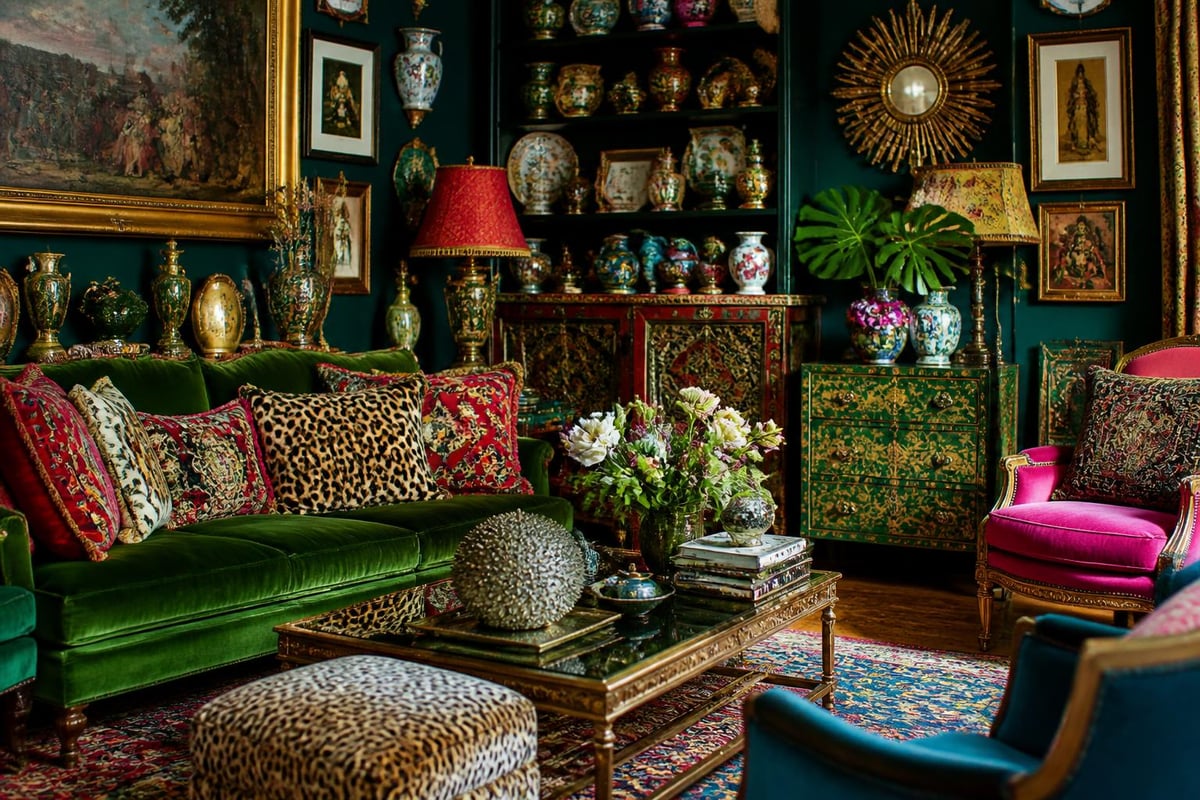
Here's where it gets good for those of us who love beautiful things but also have, you know, budgets. Maximalist decor is actually perfect for thrifters and vintage lovers. Unlike minimalism, which often requires investing in fewer but pricier "perfect" pieces, maximalism welcomes the eclectic finds you stumble upon at estate sales and consignment shops.
I've built entire maximalist vignettes for under fifty bucks by hitting up thrift stores with a good eye and a loose color palette in mind. That's the beauty of this style. It rewards the hunt.
Budget-Friendly Maximalist Shopping Strategy
Start with these approaches:
- Choose your color story first (mine's blush pink, black, and gold, naturally)
- Thrift decorative objects in those colors, regardless of style
- Layer vintage frames from dollar stores with art prints or fabric scraps
- Collect candlesticks, vases, and bowls in varying heights
- Hunt for textiles at HomeGoods, TJ Maxx, or estate sales
- Mix high and low without apology
The secret? Everything looks more expensive when it's grouped intentionally. Three cheap brass candlesticks become a moment. One looks like you forgot to finish decorating.
| Budget Source | What to Buy | Average Cost |
|---|---|---|
| Thrift Stores | Frames, vases, decorative objects | $2-$15 |
| Estate Sales | Vintage textiles, art, furniture | $5-$50 |
| HomeGoods/TJ Maxx | New pillows, throws, small furniture | $15-$100 |
| Facebook Marketplace | Larger furniture pieces | $0-$200 |
| Dollar Stores | Candlesticks, small frames, faux florals | $1-$5 |
Mastering Pattern and Color Mixing
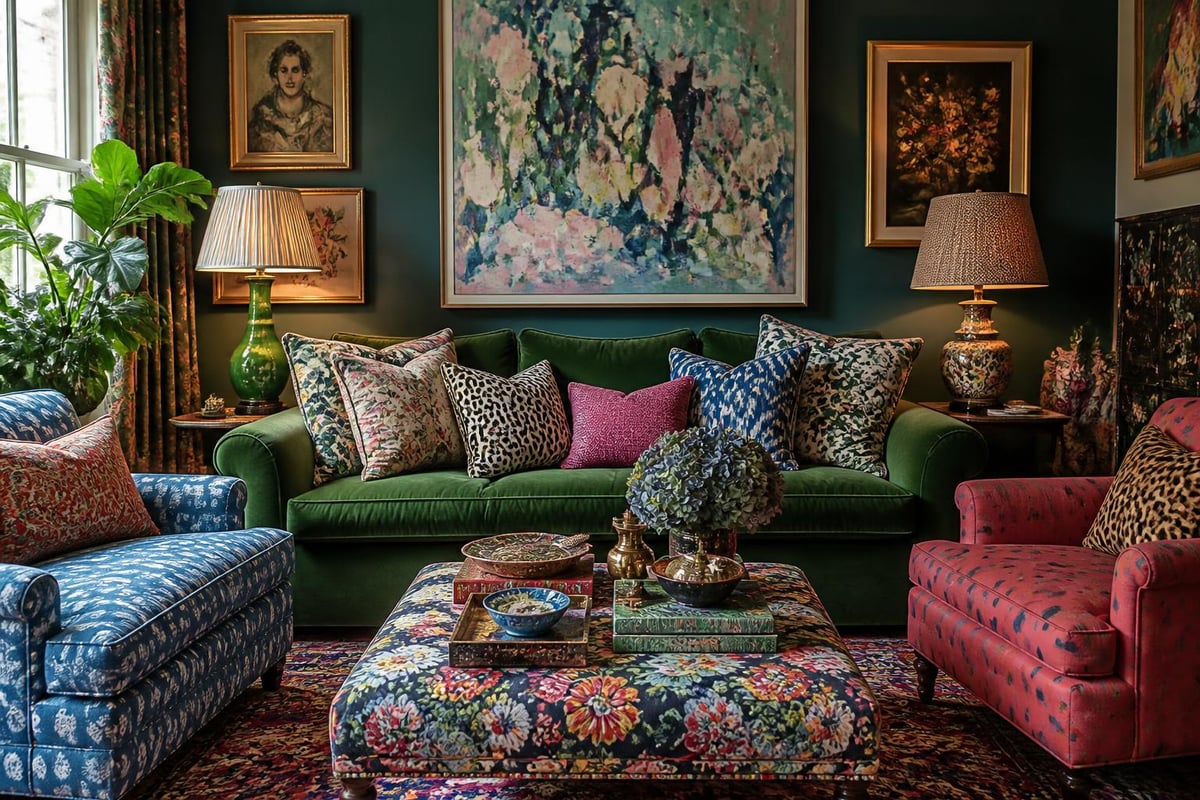
This is where people get nervous, but it's honestly the most fun part. Layering bold colors and patterns is what gives maximalist decor its signature richness. The trick is finding the common thread.
Maybe it's a color that appears in multiple patterns. Maybe it's a similar scale (all large florals, or all small geometrics). Maybe it's a vibe (all vintage, all glam, all bohemian). You don't need to match. You need to harmonize.
My Pattern Mixing Formula
I use what I call the "rule of three textures and three patterns." In any space, I aim for:
Three different textures:
- Something plush (velvet, faux fur)
- Something natural (linen, cotton, jute)
- Something with sheen (silk, satin, metallics)
Three different pattern types:
- One large-scale pattern (big florals, oversized stripes)
- One medium-scale pattern (classic prints, medium geometrics)
- One small-scale pattern (tiny dots, delicate prints)
This creates visual rhythm without chaos. Your eye moves around the room finding connections rather than getting overwhelmed.
The Art of the Vignette
Maximalism lives in the details, and vignettes are where you get to play. A vignette is just a fancy term for a small, styled grouping of objects. Think of your nightstand, a bookshelf, your coffee table, that weird corner in your living room.
Achieving a curated maximalist look means treating each surface as an opportunity for storytelling. But here's the thing: you can absolutely do this on a budget with things you already own or can find secondhand.
Creating Killer Vignettes
The basic formula:
- Start with varying heights (use books to prop things up if needed)
- Add a large anchor piece (a lamp, tall vase, framed art)
- Layer in medium pieces (books, decorative boxes, small plants)
- Finish with small details (candles, trinkets, personal treasures)
- Include something alive (fresh flowers, a plant, even a pretty branch)
The magic number is usually 3-7 objects per vignette. Odd numbers feel more natural. And please, let things overlap a little. Perfectly spaced objects scream "trying too hard."
Wall Treatments That Make a Statement
Walls are prime real estate in maximalist decor, and you've got options that range from zero dollars to a modest investment. The key is not leaving them bare.
Gallery walls are the obvious choice, but they're not your only move. Wallpaper (even the peel-and-stick kind) can transform a space. Bold paint colors work wonders. Hanging textiles, mirrors, plates, or even a collection of vintage hats all qualify.
Gallery Wall Success
Here's what actually works, based on trial and lots of error:
- Mix frame styles and finishes (all matching looks too formal)
- Include different types of art (prints, photos, textile pieces, mirrors)
- Start with the largest piece and build around it
- Lay everything out on the floor first (trust me on this)
- Keep spacing relatively consistent (2-3 inches between frames)
- Don't worry about perfect symmetry
You can build an incredible gallery wall entirely from thrifted frames and free printables from museums or artists online. I've done it. It looks expensive. It wasn't.
Furniture and Major Pieces on a Maximalist Budget
Let's talk about the bigger stuff. You don't need to replace your entire living room to embrace maximalist decor. In fact, you probably shouldn't. What you need is to layer onto what you have.
That plain beige sofa? Pile it with velvet pillows in jewel tones. Add a vintage throw. Suddenly it's maximalist. Your basic bookshelf? Style it within an inch of its life. Mix books with decorative objects, plants, framed photos, and small art pieces.
Smart furniture investments for maximalism:
- A vintage bar cart (works as a bar, plant stand, or styling surface)
- An interesting coffee table (go for marble, brass, or unique shapes)
- Upholstered pieces in bold fabrics (even one chair makes a statement)
- Ornate mirrors (they bounce light and add drama)
- Unique lighting fixtures (chandeliers, sculptural lamps, vintage sconces)
Check Facebook Marketplace, estate sales, and consignment shops. The best maximalist pieces have history and character, which means they're often cheaper than new minimalist furniture anyway.
| Furniture Type | Maximalist Approach | Where to Find |
|---|---|---|
| Seating | Bold colors, mixed patterns, vintage shapes | Estate sales, consignment shops |
| Storage | Ornate bookcases, vintage cabinets, decorative boxes | Antique stores, Marketplace |
| Tables | Marble, brass, carved wood, unique shapes | Thrift stores, vintage shops |
| Lighting | Chandeliers, colored glass, sculptural forms | Habitat ReStore, online vintage sellers |
Textiles: The Secret Weapon
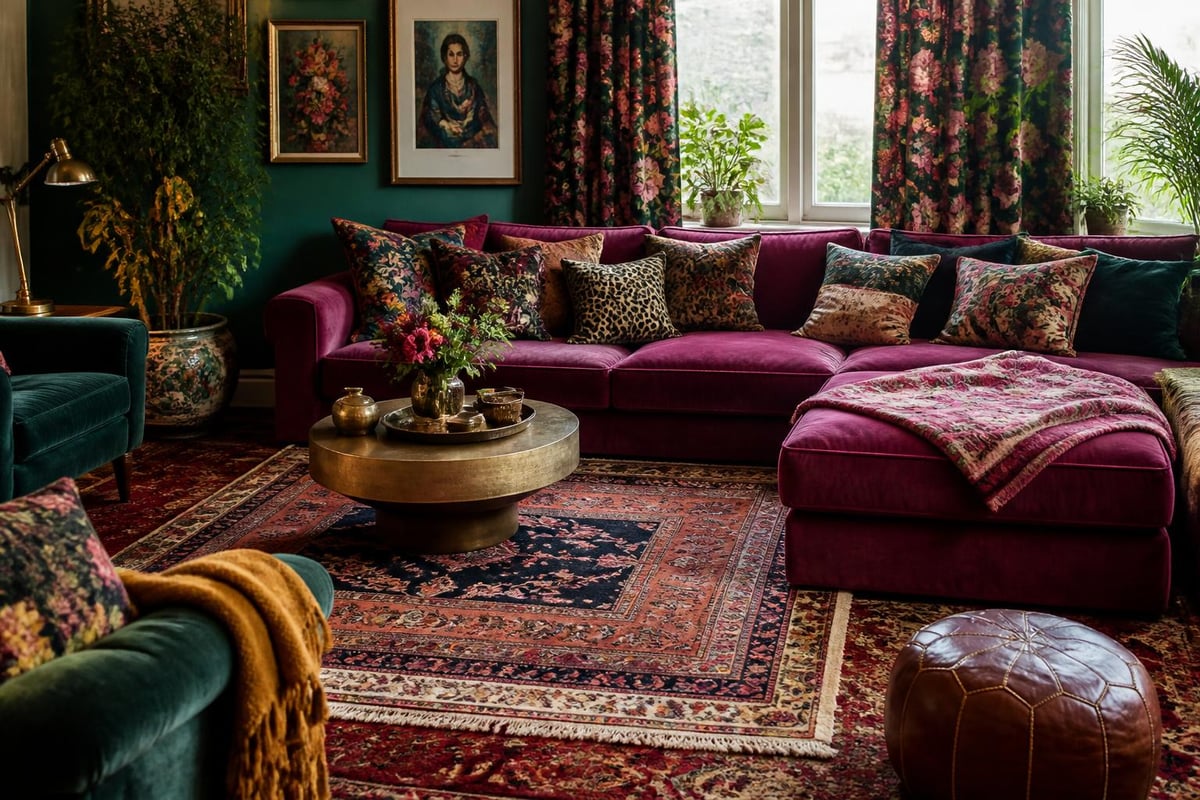
If I could only maximize one category in my home, it would be textiles. They're the fastest way to add color, pattern, texture, and warmth. Plus, they're easy to change seasonally, which appeals to my seasonal living soul.
Layer rugs. Yes, actually put a smaller vintage rug on top of a larger neutral one. Throw blankets don't have to be folded perfectly on your sofa. Pile them up. Mix pillow patterns on your bed. Hang a tapestry or vintage scarf as art.
Textile Layering Essentials
For a maximalist bedroom:
- Multiple throw pillows in varied sizes and patterns
- A duvet or quilt plus a throw blanket (or three)
- Curtains in a bold print or rich color
- A rug that adds pattern or texture
- A decorative pillow situation that requires "bed pillows" versus "decorative pillows"
For a maximalist living room:
- Area rug as your foundation
- Throw pillows in at least three different fabrics
- Multiple throws casually draped
- Curtains that add color or pattern
- Maybe a second smaller rug layered on top
You can find incredible vintage textiles at estate sales, or hit up HomeGoods for new pieces. Mix them freely. A vintage velvet pillow next to a new geometric print? Chef's kiss.
The Collections Question
One of the most defining elements of maximalist decor is displaying collections. Not hiding them in closets. Not apologizing for them. Actually celebrating them.
Books, vintage cameras, candlesticks, ceramics, plants, hats, baskets, whatever you collect, it deserves to be seen. The trick is grouping similar items together rather than scattering them randomly.
Display strategies that work:
- Dedicate a shelf or surface to one collection
- Group by color for visual cohesion
- Vary heights and depths within the collection
- Mix the collection with other objects to avoid museum vibes
- Rotate items seasonally to keep it fresh
I have a ridiculous number of vintage brass candlesticks. Instead of pretending I don't, I group them on my mantel, my coffee table, my bookshelf. They create rhythm and repetition throughout my space. It looks intentional because it is.
Common Maximalist Mistakes (and How to Avoid Them)
Even maximalism has rules. Sort of. More like guidelines. Here's what trips people up.
Mistake #1: No cohesive color story. You need some thread connecting everything. Even if you love all the colors, pick 3-5 main ones and let those guide you.
Mistake #2: Forgetting negative space. Maximalism doesn't mean every surface is covered. Your eye needs places to rest. Leave some breathing room.
Mistake #3: Buying everything at once. The best maximalist spaces evolve. They tell stories. Give yourself time to find the right pieces.
Mistake #4: Ignoring scale. All small objects or all large objects creates visual monotony. Mix it up.
Mistake #5: Not editing. Yes, even maximalists edit. If something doesn't fit your color story or vibe, it's okay to let it go. Donate it, sell it, or store it for later.
Seasonal Maximalism
Here's where maximalist decor gets really fun. Because you have layers of things, you can easily swap elements seasonally without starting from scratch. This keeps your space feeling fresh and celebrates the rhythms of the year.
In fall, I add velvet in deeper colors, swap my pink and gold accents for burgundy and brass, and bring in dried florals. Come spring, lighter linens return, fresh flowers appear, and brighter colors rotate back in. The bones of my maximalist decor stay the same. The accessories shift.
Seasonal swapping strategy:
- Keep your large furniture and major art year-round
- Rotate throw pillows and blankets seasonally
- Change out smaller decorative objects (vases, candlesticks, books)
- Adjust your floral and plant situation to reflect the season
- Store off-season items in pretty boxes or baskets
This approach also helps if you're on a budget. Instead of buying everything at once, you can build your seasonal collections over time. Hit post-holiday sales, thrift stores, and clearance sections.
Making Maximalist Decor Work in Small Spaces
You absolutely do not need a mansion to embrace maximalism. Small spaces can handle this style beautifully. The key is being even more intentional about your choices.
Refined maximalism in compact spaces means choosing multi-functional pieces, using vertical space wisely, and keeping your color palette slightly more focused.
Small Space Maximalist Tips
What works in tight quarters:
- Go vertical with floor-to-ceiling shelving and tall art
- Use mirrors strategically to bounce light and create depth
- Choose furniture with storage (ottomans, benches, tables with shelves)
- Embrace bold wallpaper on one accent wall
- Keep your color palette to 3-4 main colors
- Layer rugs to define zones
- Don't shy away from larger art pieces (they can actually make small rooms feel bigger)
I've seen studio apartments that absolutely nail maximalism by treating walls as canvases and using every vertical inch wisely. It's about creating richness within your square footage, not fighting against it.
Mixing Design Styles Like a Pro
One of the best things about maximalist decor is that it welcomes mixing styles. Mid-century modern meets bohemian meets traditional meets glam? Absolutely. The rules are looser here.
That said, you still want some coherence. Expert tips on mixing different design styles suggest finding a unifying element, whether that's a color palette, an era, a material, or a mood.
Successful style mixing approaches:
- Pair vintage and new in the same color family
- Mix ornate and simple to create balance
- Combine different wood tones freely
- Let one style dominate (60%) with others as accents (40%)
- Connect disparate pieces through color or material
My own space mixes vintage brass, modern pink velvet, traditional floral prints, and glam gold accents. It works because the color story (blush, black, gold) runs through everything. Find your thread, then follow it.
Living Beautifully Without Overspending
This whole maximalist journey ties directly into something I care deeply about: creating beauty on a budget. You don't need unlimited funds to live in a space that feels rich and layered and completely you.
Maximalist decor actually rewards resourcefulness. It celebrates the thrifted find, the DIY project, the inherited treasure, the clearance score. It says "yes, and" instead of "only this specific expensive thing will do."
Budget maximalism principles:
- Thrift first, buy new last
- DIY when you can (spray paint is magical)
- Shop your own home before buying anything
- Build your collections slowly and intentionally
- Invest in a few key pieces, fill in with affordable finds
- Trade with friends for variety
- Use what you love rather than what's "correct"
I've created magazine-worthy vignettes entirely from thrift store finds and things I already owned. The secret isn't money. It's vision and patience.
If you're working on paying off debt or building financial freedom, maximalist decor on a budget aligns perfectly with those goals. Beautiful living doesn't require sacrificing your financial health. It requires creativity instead.
The Emotional Intelligence of Maximalist Spaces
Here's something nobody talks about enough: maximalist decor can be incredibly grounding and comforting. Walking into a space filled with things you love, colors that energize you, and textures that feel good creates an emotional experience.
This isn't shallow or frivolous. Your environment affects your mental health, your energy, your daily mood. Creating a home that reflects who you actually are, rather than who design magazines say you should be, is an act of self-care.
For those of us who've spent years people-pleasing or shrinking ourselves to fit others' expectations, maximalist decor can feel like finally exhaling. It's permission to take up space. To be loud. To be much.
The emotional benefits:
- Surrounded by meaningful objects creates comfort and security
- Visual richness can be stimulating and energizing
- Personal expression builds confidence and authenticity
- Evolving collections give you something to tend and curate
- Color and pattern can lift mood and reduce stress
Your home should support your wellness journey, not drain it. If maximalist decor makes you happy, that's reason enough.
Maintaining and Editing Your Maximalist Space
Let's be real: more stuff means more to clean and maintain. Maximalist decor requires regular attention to avoid crossing into chaos territory. But it's not as overwhelming as it sounds.
I do a monthly edit where I dust, rearrange, and remove anything that's not working. Things get rotated out, new finds get incorporated, and I make sure every surface still feels intentional rather than cluttered.
Monthly Maximalist Maintenance
Set aside time each month to:
- Dust all your collections and surfaces (yes, all of them)
- Evaluate each vignette for balance and flow
- Remove anything that no longer fits your vision
- Rotate items to keep things fresh
- Add seasonal elements as appropriate
- Straighten books and art
- Fluff pillows and fold throws
This regular attention keeps maximalism from becoming overwhelming. It's the difference between curated abundance and actual clutter.
Your Maximalist Permission Slip
If you've been holding back on decorating the way you really want because you thought you were supposed to like minimalism, consider this your official permission slip. Maximalist decor isn't a trend. It's a design philosophy that's been around forever and will continue long after the current minimalist phase fades.
You're allowed to love color. You're allowed to display your collections. You're allowed to layer patterns and pile on the pillows. You're allowed to create spaces that feel full and rich and completely, unapologetically you.
The goal isn't to impress anyone or follow rules. It's to build a home that supports your actual life, reflects your actual personality, and brings you actual joy every time you walk through the door.
Start small if you're nervous. Add one bold pillow. Hang one gallery wall. Bring in one vintage find. See how it feels. Then keep going, piece by piece, until your space tells your story exactly the way you want it told.
Maximalist decor proves that beautiful, intentional living doesn't require emptying your space or your wallet. It's about celebrating abundance, embracing what you love, and creating homes that actually feel like home. If you're ready to build a life that's rich in beauty, meaning, and style without the overspending, Seasonably Fare is here with the practical advice, budget-friendly tips, and warm encouragement you need. Let's create something gorgeous together.